Class 9 is often called the silent shift in a student's academic life. The syllabus gets significantly harder, and question papers adopt an entirely new format. While this is not a board exam, the stakes are higher than they appear, because whatever a student struggles with in Class 9 becomes a persistent learning gap they carry directly into their board year.
Every September in Gurugram, parents reach out to Dheeru Home Tuitions with one of two urgent questions: how should my child prepare for the half-yearly exam? or my child has only two weeks left, what should we focus on?
This guide from our secondary academic faculty answers both questions thoroughly. It outlines what the CBSE assessment structure requires, details high-weight chapters across our core courses & subjects, and concludes with an actionable 3-week revision plan designed to turn half-yearly preparation into lasting board readiness.
Why Class 9 Is Not Just Another School Year
CBSE deliberately designs Class 9 as the practice year for Class 10 boards. The exam pattern is identical: 80-mark theory paper in the same format, the same 50% competency-based question mandate, and the same internal assessment structure of Periodic Tests, Notebook Submission, and Subject Enrichment Activities.
The CBSE Class 9 exam pattern deliberately mirrors the Class 10 board format so that students get a full year of structured practice with competency-based questions before it counts toward a final board certificate.
In practice, a student who treats Class 9 as a relaxed year and relies on passive reading or memorising NCERT answers will struggle significantly in Class 10 boards. The half-yearly serves as the first genuine test of how well a student handles the updated question pattern.
There is also a direct syllabus connection. Rather than being isolated topics, the chapters introduced in Class 9 serve as the indispensable foundations for Class 10 board chapters:
| Class 9 Chapter | Class 10 Board Chapter It Feeds Into |
|---|---|
| Linear Equations in Two Variables | Pair of Linear Equations in Two Variables (Class 10) |
| Laws of Motion (Force & Motion) | Light Reflection & Refraction, Electricity (builds on foundational physics dynamics) |
| Atoms and Molecules | Chemical Reactions & Equations, Acids, Bases & Salts |
| Cell: The Unit of Life | Life Processes, Heredity & Evolution |
| Democratic Politics (Class 9) | Democratic Politics (Class 10: directly extends) |
| People as Resource (Economics) | Development, Money & Credit (Class 10 Economics) |
A student who genuinely understands the Class 9 chapters listed above will cover roughly 40% of their Class 10 board revision simply by revising what they already know. A student who mugged the Class 9 chapters and forgot them after the exam will cover zero.
The CBSE Class 9 Marks Structure: What Parents Need to Know
The 80+20 structure applies to every subject and is worth understanding clearly before the half-yearly.
- 50% competency-based (MCQ, case study, A-R)
- 20% short answer questions
- 30% long answer questions
- No negative marking
- Periodic Tests: 10 marks (best 2 of 3)
- Notebook submission: 5 marks
- Subject Enrichment: 5 marks
- Half-yearly counts toward Periodic Test component
Do half-yearly marks count in the final result?
Half-yearly marks are not directly added to the annual result. The final annual result uses the 80-mark theory exam and 20-mark internal assessment. However, because the half-yearly is one of the three Periodic Tests and CBSE counts the best two out of three, a poor half-yearly score can lower the 10 marks allocated to Periodic Tests in the permanent Internal Assessment. In short, the half-yearly exam directly impacts overall performance.
What Class 9 Half-Yearly Covers: Subject-by-Subject Breakdown
The half-yearly tests chapters covered from April to August 2026, which represents roughly the first 4 to 6 chapters of each subject. Here is what carries the most weight in each paper, and where students typically lose marks.
The Class 9 Maths syllabus is divided across six units. Based on the official CBSE unit-wise marks distribution, our Class 9 Maths tutors focus on these high-weight areas for the half-yearly examination:
Algebra (Unit II): 20 marks Geometry (Unit IV): 25 marks Number System: 7 marks Coordinate Geometry: 4 marks
Algebra (Polynomials, Linear Equations in Two Variables, and Algebraic Identities) carries the highest weight and accounts for the most lost marks in half-yearly exams. Students should master standard algebraic identities such as (a+b)², (a-b)², and (a+b)³, along with graph-plotting for linear equations.
Geometry (Lines and Angles, Triangles and Congruence) introduces formal proof-writing. Students frequently lose marks by writing conclusions without following the step-by-step statement-and-reason format. Every theorem answer must include given, to prove, construction, and proof in that exact sequence.
Physics Numericals Pattern in Maths: Mensuration (Surface Area and Volume) appears in the later half of the year but some schools include early chapters. Confirm with your school's date sheet which units are covered this half-yearly.
Science is the subject where students lose the most half-yearly marks unnecessarily, largely because it rewards conceptual application rather than mere passive study hours. Supported by our secondary board Science specialists, it spans three distinct domains that each require a dedicated approach:
Physics (Motion and Laws of Motion): This section is heavily numerical. The three equations of motion must be memorised and applied fluently:
Practice interpreting distance-time and velocity-time graphs, as these frequently appear as case-study questions in the competency-based section. A student who struggles to read a velocity-time graph can easily lose 4 to 6 marks on these questions.
Chemistry (Matter in Our Surroundings, Is Matter Around Us Pure): This area is concept- and definition-heavy. Focus on separation techniques (such as evaporation, centrifugation, and chromatography), types of mixtures, and the physical and chemical properties of states of matter. These appear frequently in assertion-reason questions.
Biology (Cell and Tissues): This section relies heavily on diagrams. The half-yearly almost always includes a 3 to 5 mark question asking for a neat, labelled diagram of a plant cell, animal cell, or types of plant tissues. Drawing and labelling these correctly secures effortless marks that require zero calculations.
Social Science is consistently underestimated because students assume it is simple without mathematical calculations. Consequently, many students who score 75+ in Maths and Science end up with 55 to 60 marks in Social Science, pulling down their overall aggregate.
History (The French Revolution, Socialism in Europe): Understanding cause-and-effect carries much more weight than memorising isolated dates. An exam question is far more likely to explore why the Third Estate revolted than simply ask which year the Bastille fell. In the competency section, a source extract requires contextual analysis, allowing prepared students to answer in minutes while rote-learners struggle.
Geography (India: Size, Location, and Physical Features): Map-pointing provides a guaranteed 3 to 5 marks in every half-yearly. Practice locating rivers, mountain ranges, passes, and states on a blank outline map of India several times before the exam. This scoring area is purely mechanical and requires only repeated hands-on practice.
Civics (Constitutional Design and Electoral Politics): Focus on core concepts like Fundamental Rights, democratic values, and election procedures. The competency section frequently presents hypothetical situations and asks which constitutional provision applies.
Economics (The Story of Village Palampur, People as Resource): This unit is concise yet conceptual. Make sure to understand human capital formation, unemployment types, and the economic roles of education and health, as these topics frequently form case-study questions.
The CBSE Class 9 English syllabus divides the 80-mark paper into three distinct sections. Covered systematically by our secondary board language faculty, students lose marks most often in two places:
Reading Section (20 marks): This section focuses on inference-based questions where answers must be deduced directly from the text. Students who answer from external recall rather than the passage text risk losing marks. The golden rule is that every reading comprehension answer must be grounded in direct textual evidence from the passage.
Writing Section (20 marks): Structure matters just as much as content. A formal letter with missing dates, misplaced salutations, or an absent subject line loses marks before the body is evaluated. Practice the exact layouts for formal letters, notices, and descriptive paragraphs, as these fixed formats are easy to master in a single sitting.
Common Mistakes Students Make Before Half-Yearly Exams
-
Relying on passive reading as the primary study method. Re-reading NCERT chapters creates a false sense of security. Without active recall and problem-solving, a student who has read a chapter multiple times will struggle when confronted with conceptual application questions, which make up fully half of the exam paper.
-
Ignoring NCERT in-text and exemplar questions. The competency-based questions in CBSE exams are derived directly from NCERT in-chapter questions, blue-box questions, and Exemplar problems. Students who only solve end-of-chapter exercises miss the source material for most application questions.
-
Missing units and diagram labels. A Physics numerical without the unit (writing 9.8 instead of 9.8 m/s²) loses the mark. A Biology diagram without labels loses half its marks. These are mechanical losses on questions the student actually knew the answer to.
-
Poor time allocation in the exam hall. Spending 20 minutes on a 2-mark question and rushing high-value 5-mark answers at the end is a common pitfall. The solution is practising under timed test conditions well in advance, rather than attempting mock papers only on the night before the exam.
-
Leaving the writing section of English and Hindi for last. The writing section has fixed formats that take exactly as long to answer whether prepared or not. Students who run out of time on writing sections lose 15–20 marks on questions that could have been completed in 25 minutes with practice.
A 3-Week Revision Plan That Works
This revision framework assumes a three-week window before the exam, which matches the typical schedule when Gurugram schools release their date sheets. Each week has a dedicated milestone, so it is important to complete Weeks 1 and 2 before moving on to Week 3.
One rule for the 3-week plan
Attempting Week 3 mock papers is only fruitful once Weeks 1 and 2 are finished. Jumping straight into sample papers without mastering foundational NCERT concepts can lead to low scores and unnecessary panic, whereas following the preparation sequence builds lasting confidence.
Sample Daily Study Schedule: 3 Weeks Before Half-Yearly
| Time Slot | Week 1 (NCERT) | Week 2 (Practice) | Week 3 (Mock Papers) |
|---|---|---|---|
| 5:00–7:00 PM | Science (1 chapter, all questions) | Maths (15 problems, no solution peek) | Full mock paper (Subject 1) |
| 7:30–8:30 PM | Social Science (highlight + notes) | Physics numericals (10 problems) | Mark paper, note weak question types |
| 8:30–9:00 PM | English: 1 reading passage | 1 Biology diagram without reference | Revise weak areas only |
| Weekend Morning | Maths: all in-chapter exercises | 2 geometry proofs without reference | Full mock paper (Subject 2) |
The Stream Selection Signal: Why Class 9 Half-Yearly Matters Beyond This Year
For parents of Class 9 students in Gurugram, the half-yearly serves a crucial function beyond this academic year. It provides the earliest objective evidence regarding whether a student is naturally suited for our Senior Science Stream (Physics, Chemistry, Maths, Biology), Senior Commerce Stream (Accounts, Economics, Business Studies), or Humanities & Arts. Our broader range of academic coaching programs helps families decode these aptitude signals early.
A student who consistently struggles with Physics numericals and Algebra while performing strongly in History, Geography, and writing tasks is communicating something meaningful about their learning profile. Conversely, a student who breezes through the Maths paper while losing marks in History source analysis has a completely different learning trajectory.
Half-yearly marks are certainly not destiny, as students who revamp their preparation techniques in Class 10 frequently surpass their earlier scores. However, these marks offer invaluable diagnostic data. Gurugram schools with competitive academic criteria often reference Class 9 consistency when evaluating stream eligibility. Beginning this conversation now gives families ample time to strengthen weaker subjects or validate stream preferences with confidence.
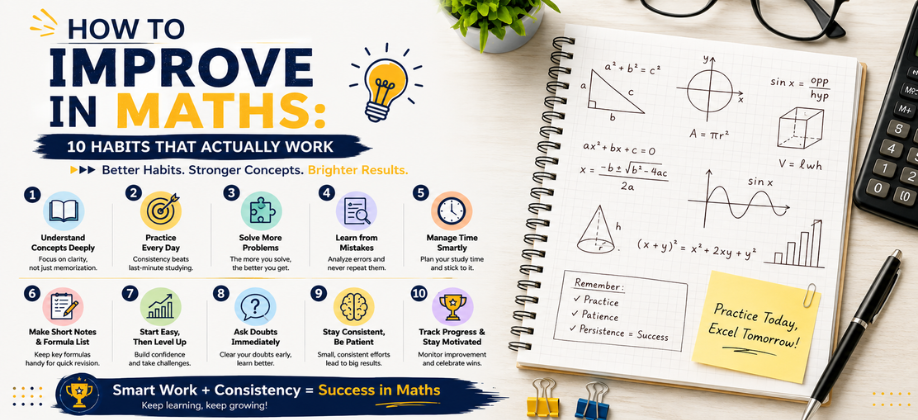
Our board exam preparation timetable guide covers how to transition from half-yearly revision into the full board preparation cycle that begins in October. Furthermore, for students who find Maths particularly demanding, the core study habits detailed in our Maths improvement guide should be established right away, rather than waiting for the high-pressure environment of Class 10.
How Dheeru Home Tuitions Helps Class 9 Students Turn Around Half-Yearly Scores
When half-yearly exams are only 2 to 3 weeks away, crowded coaching batches cannot address the individual learning gaps a Class 9 child developed over the previous five months. At Dheeru Home Tuitions, we deliver personalised, 1-on-1 CBSE exam coaching right at your home in Gurugram, targeted precisely at your school's half-yearly syllabus.
Whether your family is located in DLF Phase 1–5, along Golf Course Road, on Sohna Road, in Palam Vihar, or across major Gurugram sectors, our verified home tutors understand the exact examination standards of leading Gurugram schools, including DPS (Sector 45 & Maruti Kunj), The Heritage School, Pathways School, Amity International, and Shiv Nadar.
Through our dedicated Class 9 & 10 Secondary Boards Program and comprehensive Courses & Subjects Catalog, here is exactly how our academic faculty supports your child in the critical weeks before exams:
1. Rapid April–August Syllabus Diagnostic
In the very first demo session, our tutor reviews your child's recent unit tests, class notebooks, and school worksheets. Rather than re-teaching all chapters from scratch, we pinpoint the exact 3 or 4 high-yield topics causing panic (such as Polynomial factorisation, Motion velocity-time graphs, or Geometry congruence proofs) and create a daily recovery schedule.
2. Mastering the 50% CBSE Competency Pattern
CBSE's mandate requires 50% application-oriented questions. Our specialised Class 9 Maths and Science tutors train students using NCERT Exemplar and case-study problems, teaching them to deconstruct unfamiliar real-world questions, interpret scientific data, and solve assertion-reason pairs systematically.
3. Step-by-Step Board Answer Writing & Time Management
Students regularly lose 10 to 15 marks on questions they know how to solve simply due to poor presentation. We train students on exact CBSE step-marking criteria: writing Given · To Prove · Proof for Geometry, including SI units in Physics calculations, and framing structured 3-point answers for Social Science and English writing tasks.
4. Director-Led Quality with Zero Advance Commitment
Founded and academically directed by Dheeraj Sir (M.Sc. Physics, B.Ed.), every tutor in our network undergoes rigorous subject-matter verification and background checks. We offer a 100% free home demo class with zero registration fee and no advance payment, alongside a prompt tutor replacement guarantee if the learning style does not match your child.
What to Do Right Now
- Find the half-yearly date sheet. If it has not been shared yet, ask the class teacher or check the school app. Most Gurugram private schools publish it in the first two weeks of September. Knowing the subject order helps prioritise the next two weeks.
- Identify the subject where preparation is furthest behind. Focus on the subject with the least ground covered rather than just the toughest one. Direct your Week 1 energy there first, because completing foundational NCERT coverage is an essential prerequisite for everything else.
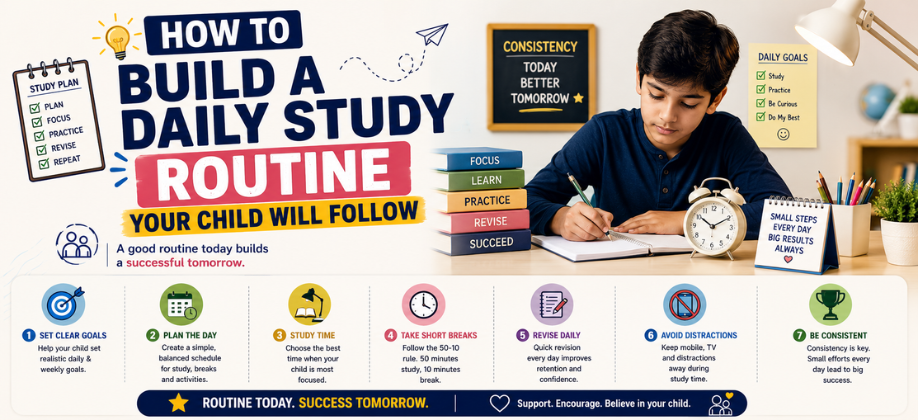
- Set a daily study routine for the next 3 weeks using the schedule above. The daily study routine guide covers how to build the routine so it actually holds during the high-distraction exam prep period.
- Review last year's half-yearly paper if available. Reviewing the actual paper format, including question distribution, section marks, and case-study styling, significantly reduces exam-hall anxiety. Most schools maintain a consistent question structure year after year.
The Class 9 half-yearly is not a board exam, and receiving a lower mark than expected is never a crisis. Yet it remains the most informative diagnostic test available before the board year starts, provided parents and students analyze the results and take constructive action. A student who uses September feedback to upgrade their study routine enters Class 10 with a decisive advantage over peers who simply treat it as an ordinary test.